The Saxon Wars
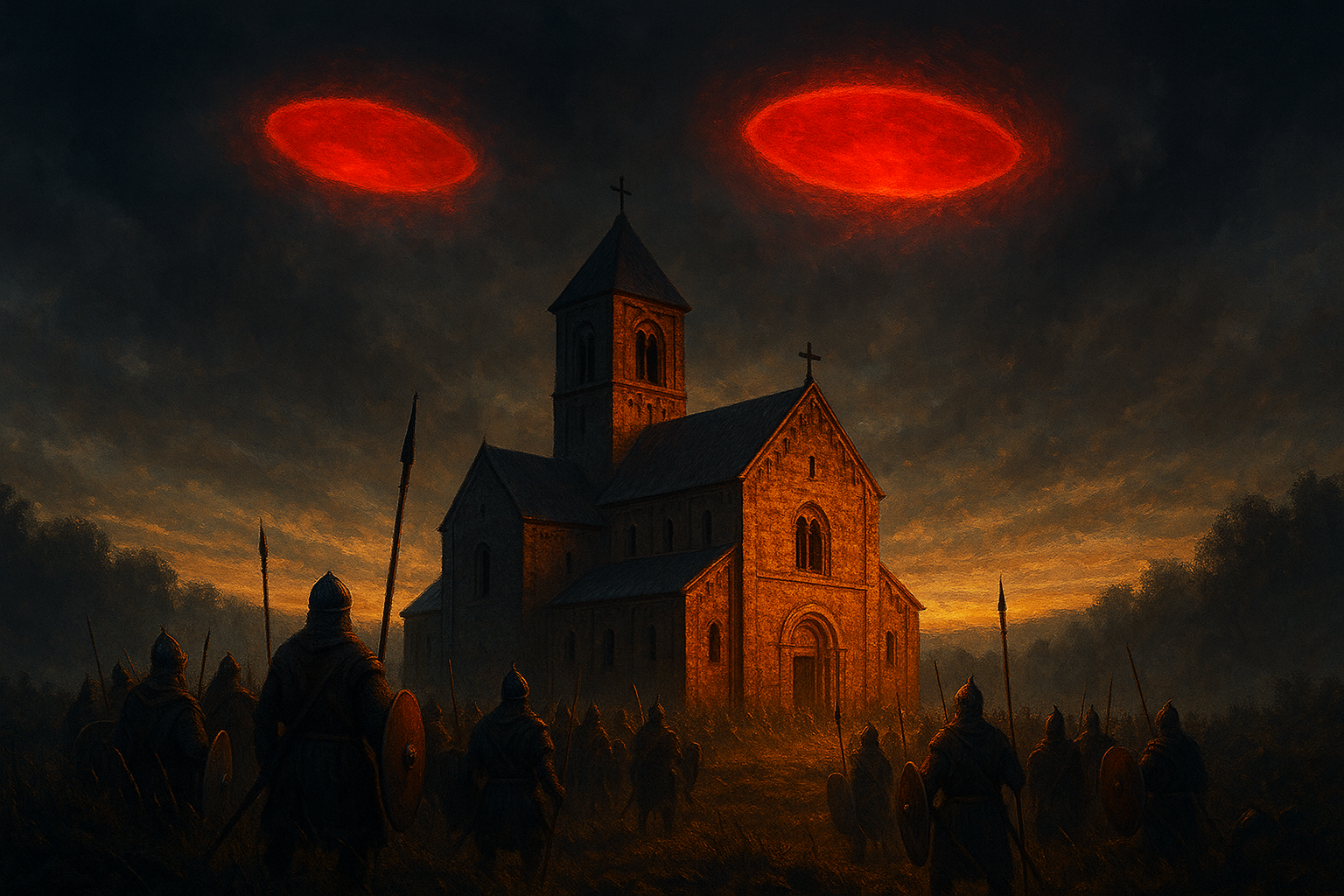
The Saxon Wars, a series of military campaigns led by Charlemagne during the late 8th and early 9th centuries, were pivotal in shaping the landscape of medieval Europe. These conflicts not only solidified Charlemagne's power but also marked a significant chapter in the Christianisation of the Germanic tribes. Among the multitude of tales that surround this tumultuous period, one particularly intriguing story stands out: the sighting of two red shield-like objects hovering above a church before a crucial battle. This account intertwines the threads of history, folklore, and the unexplained, inviting us to ponder the mysteries that have persisted through the ages.
The Historical Context of the Saxon Wars
Charlemagne, also known as Charles the Great, was the King of the Franks and Lombards and later crowned Emperor of the Romans. His reign from 768 to 814 marked a turning point in European history as he sought to unite much of Western Europe under a single Christian empire. The Saxon Wars, which spanned from 772 to 804, were a series of brutal campaigns aimed at subduing the pagan Saxons and converting them to Christianity. This was not merely a military conquest; it was a crusade to impose religious beliefs and integrate the Saxons into Charlemagne’s realm.
The Saxons, fiercely independent and resistant to external control, engaged in relentless guerrilla warfare, which made them formidable opponents. The conflict was characterised by both military strategy and acts of cultural assimilation, including the establishment of churches and the promotion of Christian teachings. As Charlemagne’s forces advanced, they encountered not just armed resistance but also deep-seated beliefs and traditions that would shape the nature of their encounters.
The Mysterious Sighting
Amidst the chaos of battle and the fervour of religious conversion, an extraordinary event unfolded. According to historical accounts, prior to a significant clash between Charlemagne's forces and the Saxons, two mysterious red shield-like objects appeared in the sky above a local church. This occurrence, reported by soldiers and witnesses of the time, sparked a mixture of awe and fear among the troops. Such sightings were not uncommon in an era steeped in superstition and religious fervour; however, the specific description of these objects has led to speculation and debate over the centuries.
The vision of these hovering objects was interpreted by many as a divine omen, a sign that the battle would favour Charlemagne and his Christian forces. The presence of these symbols in the sky seemed to bolster morale among his troops, instilling a sense of purpose and divine approval for their cause. Yet, the nature of these red shields remains a topic of intrigue. Were they manifestations of divine will, hallucinations borne from the stress of impending conflict, or could they even be something we might today term as unidentified flying objects (UFOs)?
Historical Interpretations and Folklore
The interpretation of the red shield-like objects has evolved over the years. Some historians argue that the sighting could be attributed to natural phenomena, such as atmospheric conditions or reflections of light that could create unusual shapes in the sky. Others suggest that the phenomenon might have been a psychological response to the intense stress of battle. In a time when the supernatural was often invoked to explain the inexplicable, it is easy to see how such an event would be imbued with significance.
Folklore surrounding Charlemagne often includes elements of the miraculous, painting him as a figure of divine favour. The image of red shields might have been ingrained in the collective memory of the people, symbolising protection and martial spirit. The Saxons, too, had their own myths and legends, which could have influenced their perceptions of such events. The merging of these narratives forms a rich tapestry of cultural history, revealing how the past is often interpreted through the lens of belief and myth.
Modern Implications and Theories
In contemporary discussions, the sighting of the two red shield-like objects has sparked interest among enthusiasts of both history and unexplained phenomena. Theories abound about what these objects could represent; some propose that they might have been early examples of unidentified aerial phenomena, while others consider them to be symbolic representations of the conflict itself. The interplay between history and the unexplained continues to captivate the imagination, inviting speculation and prompting further investigation.
Moreover, the narrative resonates with modern concerns about what lies beyond our understanding. The fascination with UFOs and unexplained aerial phenomena is not a new development; it is rooted in humanity's long-standing quest for knowledge about the universe. The Saxon Wars and the purported sightings that accompanied them offer a historical lens through which we can examine our enduring curiosity about the unknown and the unexplained.
Final Thoughts
The Saxon Wars of Charlemagne serve as a reminder of the complexities of history, where the lines between fact, myth, and the unexplained often blur. The sighting of two red shield-like objects hovering above a church before a critical battle adds an enigmatic layer to the already intricate narrative of conflict and conversion. As we explore these historical accounts, we are reminded of the power of belief and the human propensity to seek meaning in the unexplainable. Whether viewed through the eyes of a historian, a folklorist, or a modern-day enthusiast of the unexplained, these stories continue to inspire curiosity and wonder, inviting us to delve deeper into the mysteries of our past.
If you enjoyed reading this article then why not consider having a look at this book on Amazon.
If its not for you, then maybe a family member would appreciate it as a gift?