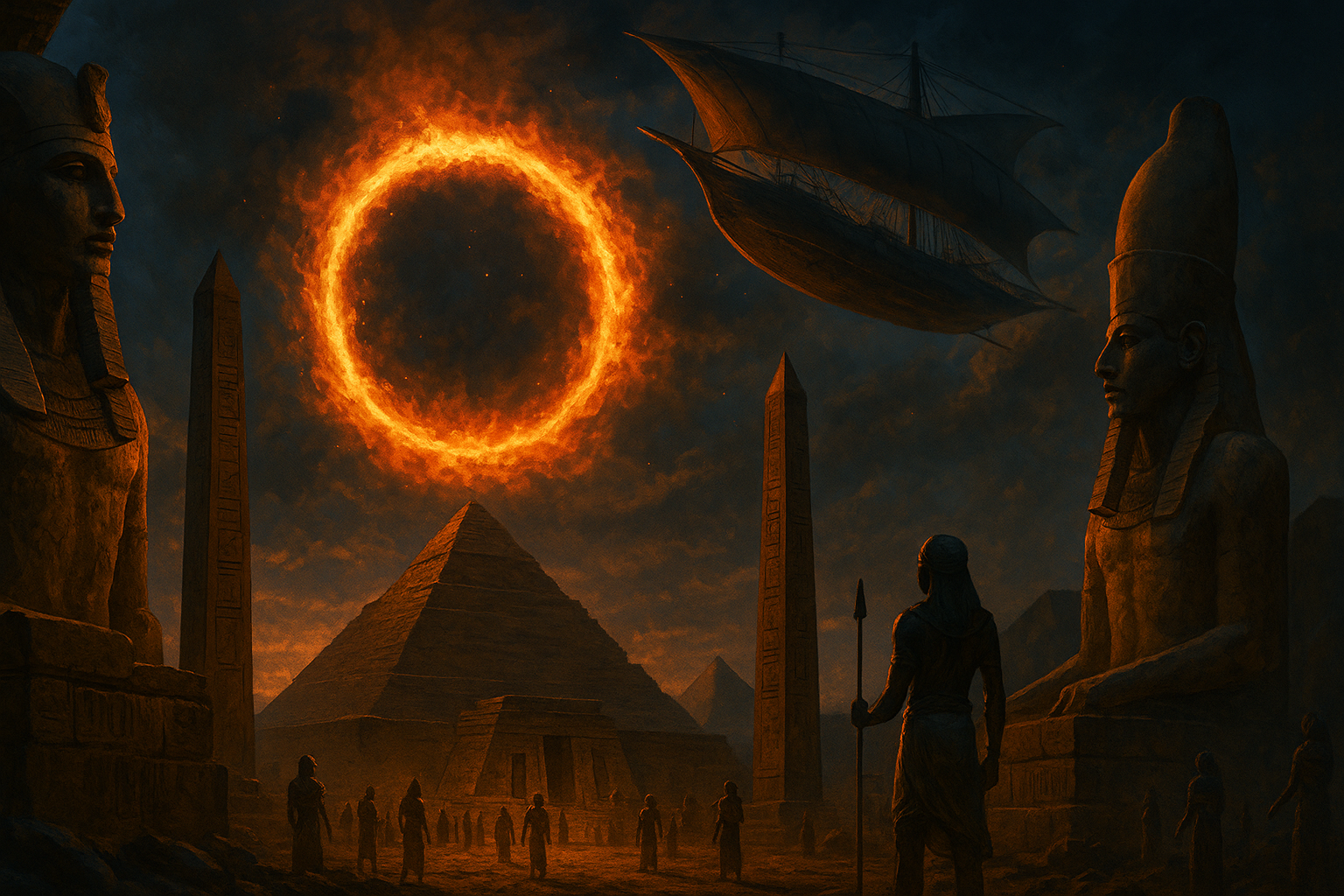
The burning sands of ancient Egypt are a hotbed for modern UFO lore. From late-night history television channels to internet forums, people love to look at the monuments of the Nile and wonder if the pharaohs had company from the stars.
But if we look past the modern sci-fi lens and dive directly into actual ancient Egyptian culture, astronomy, and mythology, a fascinating picture emerges. The Egyptians didn't have a word for "UFO," nor did they think in terms of grey aliens or nuts-and-bolts star ships. Instead, they had a highly sophisticated, deeply religious framework for categorizing anomalies in the night sky.
Here is how the ancients saw, categorized, and explained the unexplained.
The Egyptian Sky Categories
To understand how an ancient Egyptian would process a strange aerial phenomenon, you have to look at how they mapped the heavens. They split the sky into distinct spiritual and physical territories:
- The Unwearied Stars (Ikhemu-sek): These were the stars that never set below the horizon (the circumpolar stars). The Egyptians viewed them as immortal, unchanging spirits. A new, moving light here would be seen as a powerful cosmic omen.
- The Destroyers (Ikhemu-wered): This was their poetic name for the planets—the "stars that never rest." Because planets moved independently of the background stars, they were categorized as living gods traveling on a set schedule.
- The Solar Bark (Mesektet and Mandjet): The sun god Ra didn't just float; he sailed across the sky in a celestial boat. Therefore, any bright, traveling aerial object was naturally explained using the vocabulary of sailing.
What They Saw vs. How They Explained It
Because the ancient Egyptian worldview was deeply intertwined with magic and theology, physical anomalies were immediately translated into spiritual events.
1. "Fiery Disks" and The Legendary Tulli Papyrus
The most famous "UFO text" associated with Egypt is the controversial Tulli Papyrus. Supposedly dating back to the reign of Pharaoh Thutmose III (around 1481 BCE), the text allegedly describes a terrifying encounter:
"In the year 22... there came in the sky a flying fiery disk... It had no head, the breath of its mouth had a foul odour. Its body was one rod long and one rod wide... They shone more than the brightness of the sun..."
The text goes on to claim that after a few days, these "circles of fire" ascended higher into the sky and departed toward the south, while fish and birds rained from the heavens.
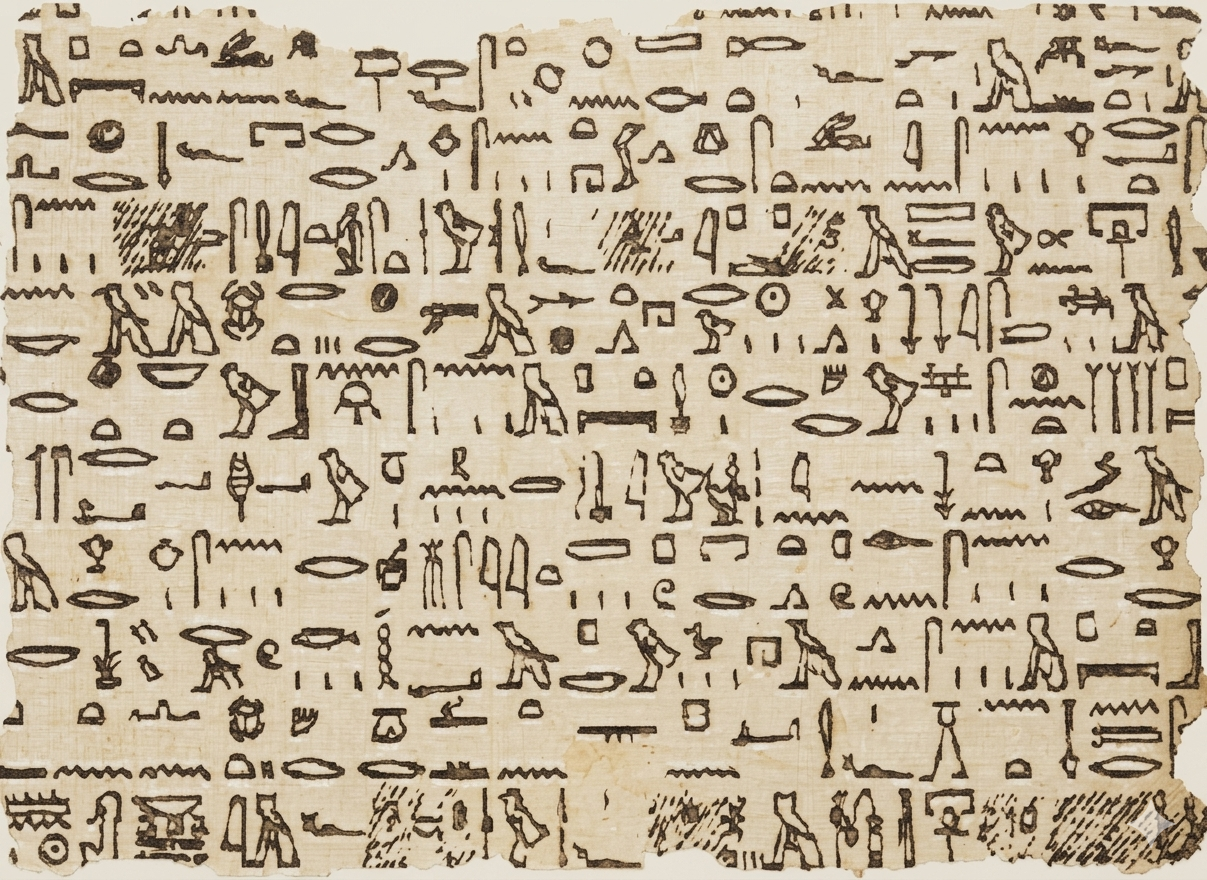
The Historical Reality: While mainstream Egyptologists generally view the Tulli Papyrus as a clever 20th-century hoax or a massive mistranslation of a standard meteor report, it perfectly captures how Egyptians would describe a plasma phenomenon or meteor: a literal "circle of fire" breaking the order of the sky. If an Egyptian saw a classic dome-shaped UFO, they wouldn't call it a craft; they would categorize it as a manifestation of Aten, the literal sun disk.
2. The Abydos "Helicopter" and Subtextual Layers
Another favourite piece of evidence for ancient astronaut theorists is found in the Temple of Seti I at Abydos. Carvings on a ceiling lintel look remarkably like a modern helicopter, a submarine, and a flying saucer or UAP (Unidentified Aerial Phenomenon).
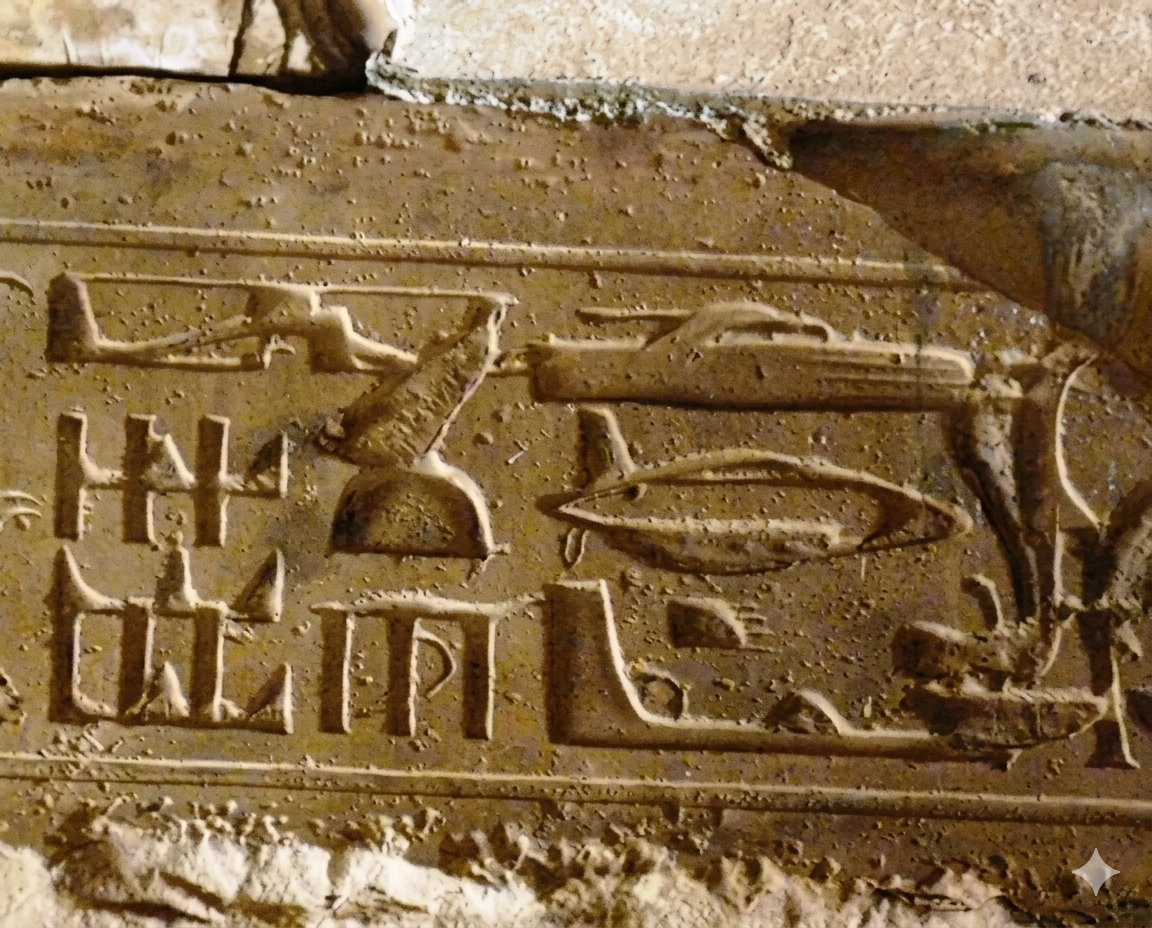
The Explanatory Correction: As much as we want this to be a blueprint for a stealth bomber, Egyptologists have completely solved this riddle. It is an accidental optical illusion caused by palimpsest—the rewriting of stone.
Seti I originally had his name carved into the stone. Later, his successor, Ramesses II, had the plaster filled in and carved his own royal titles over it. Over thousands of years, the plaster crumbled away, blending the two sets of hieroglyphs together into shapes that our modern, tech-focused brains mistakenly recognize as aircraft.
The Verdict: Gods, Not Greys
If an alien craft truly landed in ancient Memphis or Thebes, the locals wouldn't have panicked about an interplanetary invasion. They would have categorized the event as Zep Tepi—the "First Time"—a moments-in-time event where the barrier between the earthly realm and the divine realm thinned.
To the Egyptians, the sky was a canvas of the gods. A glowing object executing sharp 90-degree turns wouldn't be clocked as an advanced piece of engineering; it would be documented as a swift-moving messenger of Horus, a literal sky boat carrying an entity through the Duat (the underworld/sky realm). They explained the universe through cosmic balance (Ma'at). Anything strange in the sky was either a sign that the balance was being threatened, or that the gods were actively stepping in to restore it.
Looking for your next read?
"A Sky Older Than Flight"
A Historical Study of Aerial and Maritime Anomalies Before Aviation
Get it now on Amazon: https://www.amazon.co.uk/dp/B0H5CZD5H2