What are the Vimana Texts?
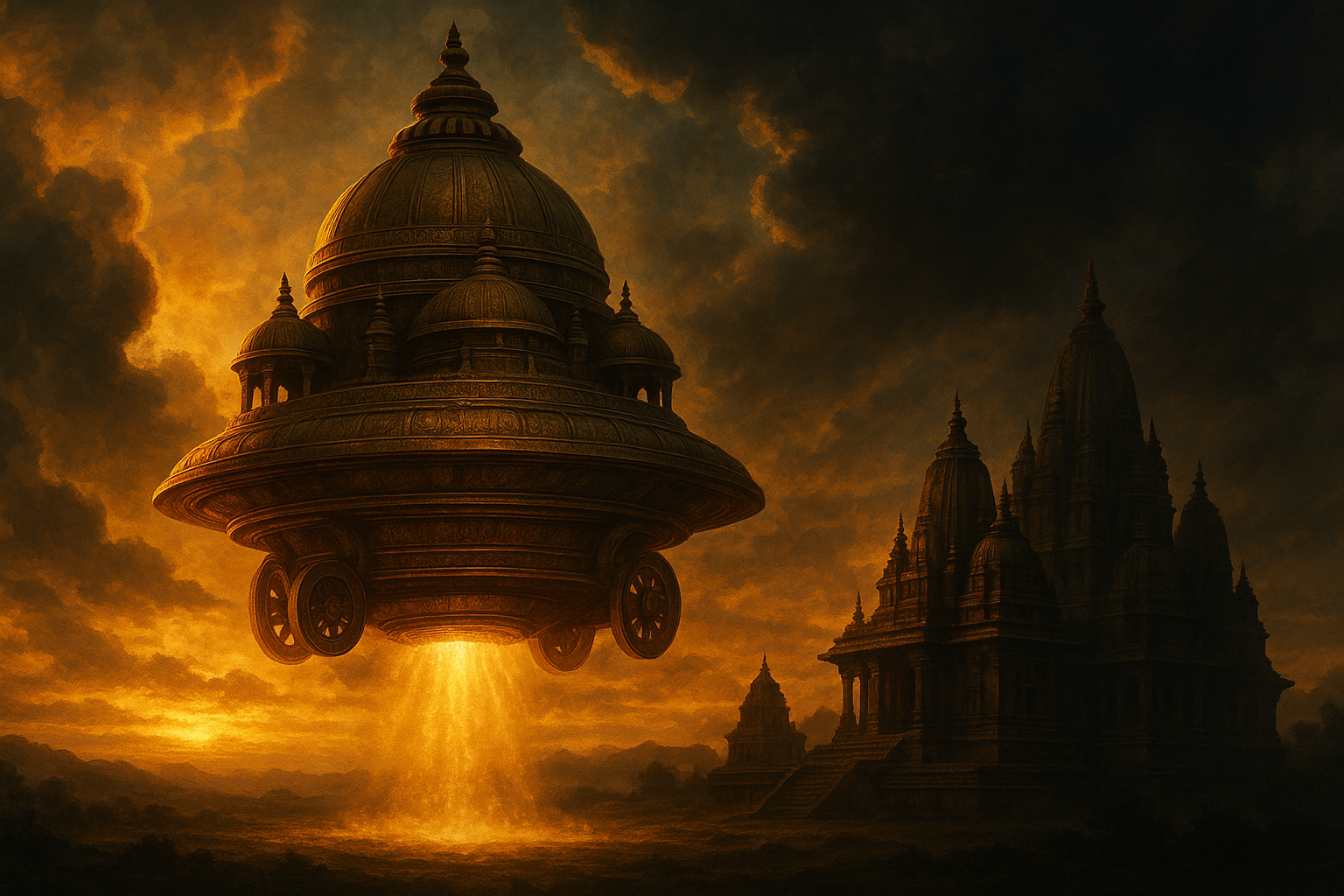
In the vast tapestry of ancient Indian literature, the Vimana texts stand out as some of the most intriguing and enigmatic works. These ancient scriptures, found primarily in the epic tales of the Mahabharata and Ramayana, describe flying chariots or "vimanas" that were said to transport gods and kings across the skies. The idea of technologically advanced vehicles in a time long before modern aviation raises fascinating questions about ancient knowledge, mythology, and the potential for historical truths hidden within these tales.
The Nature of Vimanas
The term "vimana" itself can be translated to mean "measuring out" or "to traverse," suggesting a vehicle that not only flies but also carries significant meaning in its journey. The descriptions of these flying chariots vary widely, with some texts depicting them as magnificent structures made of gold and adorned with precious jewels. Others describe them as being capable of navigating through the air with unparalleled speed and precision, much like modern spacecraft. In this sense, vimanas can be seen as symbols of divine power, suggesting that those who possessed such technology were granted the favour of the gods.
Historical Context
To appreciate the concept of vimanas fully, one must delve into the historical and cultural context of ancient India. The Vedic period, which laid the foundation for Hindu philosophy and spirituality, was characterised by a complex understanding of the cosmos. The ancient Indians viewed the universe as a multi-layered structure, filled with celestial beings, and it is within this framework that vimanas were conceived. The Mahabharata and Ramayana, composed over several centuries, contain not only myths and legends but also insights into the socio-political structures of their time, hinting at advanced knowledge of engineering, aerodynamics, and possibly even elements of what we now consider science.
Descriptions and Functions
Descriptions of vimanas in ancient texts often resemble modern aircraft in their functionalities. The "Vimana Shastra," a treatise attributed to the sage Bharadvaja, provides intricate details on the construction and operation of these flying machines. It discusses various types of vimanas, their capabilities, and even the materials required to build them. Some accounts suggest that vimanas could travel at incredible speeds, change directions instantly, and even become invisible. Such extraordinary abilities fuel speculation that ancient civilizations possessed knowledge that has been lost to time, or perhaps, that they had contact with advanced beings from other worlds.
Mythology and Symbolism
In addition to their physical descriptions, vimanas carry deep symbolic meanings within the narratives they inhabit. They often represent the journey of the soul, the quest for enlightenment, or the pursuit of divine knowledge. In the Ramayana, for instance, the aerial chariot of the god Rama, known as the Pushpaka Vimana, serves as a vehicle for not just physical travel but also for spiritual awakening. By bridging the earthly and the celestial, vimanas transform from mere machines into vessels of profound philosophical significance.
Modern Interpretations
In recent decades, the fascination with vimanas has surged, particularly among those interested in UFOs, unidentified aerial phenomena (UAPs), and ancient astronauts. Some theorists suggest that the descriptions of vimanas could represent encounters with extraterrestrial technology, proposing that ancient humans had contact with advanced civilisations capable of interstellar travel. This theory, while controversial, invites us to reconsider how we interpret ancient texts and the potential that they may contain kernels of truth regarding our history and the universe.
Scientific Perspectives
While many scholars view vimanas through the lens of mythology and literature, others have attempted to investigate the scientific plausibility of these ancient flying machines. Some researchers have drawn parallels between the aerodynamic principles described in the Vimana Shastra and modern engineering practices. This has led to discussions about how ancient Indian knowledge could have informed contemporary science, suggesting a continuity of understanding that spans millennia.
Vimanas in Popular Culture
The allure of vimanas has not remained confined to academic circles. They have permeated popular culture, appearing in films, novels, and television series that explore the intersection of mythology and science fiction. This modern portrayal adds another layer to the narrative, as contemporary audiences are invited to engage with these ancient concepts in new and inventive ways. The fascination with vimanas continues to inspire creative interpretations, blending historical intrigue with the excitement of the unknown.
Where does that leave us? The Legacy of Vimanas
The Vimana texts serve as a captivating window into ancient Indian culture, mythology, and possibly even advanced technology. Whether viewed as mythological constructs or historical accounts, they challenge us to question our understanding of the past and the potential for human ingenuity. As we continue to explore these ancient narratives, we may uncover not only the mysteries of vimanas but also the broader implications for our understanding of history, technology, and our place in the universe.
If you found that interesting check out this book.
"A Sky Older Than Flight"
A Historical Study of Aerial and Maritime Anomalies Before Aviation
Get it now on Amazon: https://www.amazon.co.uk/dp/B0H5CZD5H2